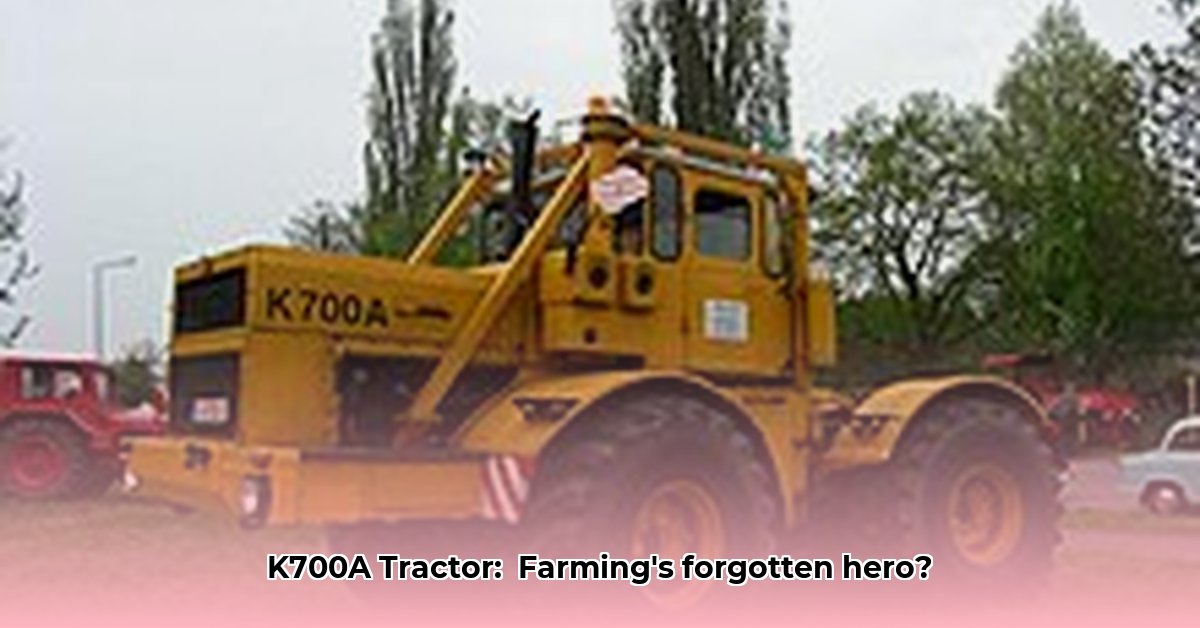
K700A Tractor: A Giant's Footprint on Sustainable Farming
Imagine the vast, sun-drenched fields of the Soviet era, the air thick with the scent of freshly turned earth and the deep rumble of a colossal machine—the Kirovets K-700A tractor. This agricultural behemoth, a symbol of increased productivity, dramatically reshaped farming practices. But its legacy is a complex one, a compelling case study in the tension between agricultural advancements and environmental stewardship. While the K700A fueled agricultural progress, its impact on soil health and fuel consumption raises crucial questions about sustainable farming practices—questions that resonate even today. For more on classic tractors, see this site on vintage tractors.
The K700A: A Farming Legend
The K-700A, with its robust 215-300 horsepower engine, four-wheel drive, and articulated steering, was a revolutionary machine. Its sheer power significantly increased the efficiency of plowing, planting, and harvesting. This led to larger yields and a drastic reduction in manual labor. However, this impressive power came at a cost.
The Environmental Shadow of Progress
The K700A's size, while crucial to its power, contributed to significant soil compaction. The tractor's substantial weight compressed the soil, reducing its ability to absorb water and hindering root growth—a long-term detriment to crop yields and overall soil health. Furthermore, its powerful engine, while a boon to efficiency, almost certainly consumed a significant amount of fuel, leaving a substantial carbon footprint. While precise figures for fuel consumption are unavailable for this era, the scale and power of the machine strongly suggest substantial fuel usage. This raises a critical question: Did the increased productivity offset the environmental costs?
Learning from the Past: Building a Sustainable Future
The K700A's story provides invaluable insights into the ongoing quest for sustainable agriculture – a balance between high yields and minimal environmental impact. The past offers lessons for all stakeholders.
Key Takeaways from the K700A Experience:
- Unintended Consequences: Powerful machinery, while boosting productivity, can have significant, unforeseen environmental consequences.
- Soil Compaction: Heavy machinery can severely compact soil, reducing water infiltration and hindering root growth.
- Sustainability Imperative: Balancing agricultural efficiency and environmental protection is critical for long-term viability.
How to Mitigate Soil Compaction from Older Farm Tractors
The Kirovets K-700A's impact on soil health highlights the critical need for sustainable agricultural practices. Understanding the causes and effects of soil compaction, as well as effective mitigation strategies, is crucial.
The K-700A's Legacy: A Double-Edged Sword
The K-700A, while increasing efficiency, caused significant soil compaction due to its weight and the prevalent farming practices of its time. This compaction reduced water infiltration, hampered root growth, and diminished long-term soil health. This underscores the importance of considering environmental impacts alongside productivity gains.
Understanding Soil Compaction: The Enemy Within
Soil compaction, the reduction of pore space in the soil due to pressure, restricts water and air movement, hindering plant root development. This results in reduced crop yields and degraded soil structure. The K-700A serves as a stark reminder of compaction's negative effects.
Mitigating Compaction: Strategies for Sustainable Practices
Addressing soil compaction requires a multifaceted approach:
Reduce Tractor Weight: Minimize the load carried by the tractor to lessen its impact on the soil.
Optimize Tire Pressure: Proper tire inflation is crucial; under-inflation causes excessive slippage and compaction, while over-inflation damages soil structure. Consult soil-specific charts for optimal pressure.
Controlled Traffic Farming (CTF): Establishing permanent wheel tracks minimizes soil disturbance outside designated pathways.
Improved Tillage Practices: Minimize tillage and the number of passes over the field. Consider no-till or reduced-till farming methods.
Crop Rotation and Cover Crops: Improving soil health through crop rotation and cover crops enhances resilience to compaction.
Subsoiling: In severely compacted areas, deep tillage can break up dense layers, but proceed cautiously.
This multi-pronged approach, even when applied retroactively to older tractor usage, can start to repair the damage done by decades of intense, yet unsustainable practices.
Modern Advancements: Lessons Learned
Modern tractors utilize advancements like improved tire designs, lighter construction materials, and GPS-guided autonomous operation to minimize compaction. While the K700A lacked these features, they illuminate a path towards more sustainable farming.
Assessing Your Situation
Regular soil testing is essential to monitor compaction levels and guide mitigation strategies. This ensures informed decision-making for long-term soil health.